
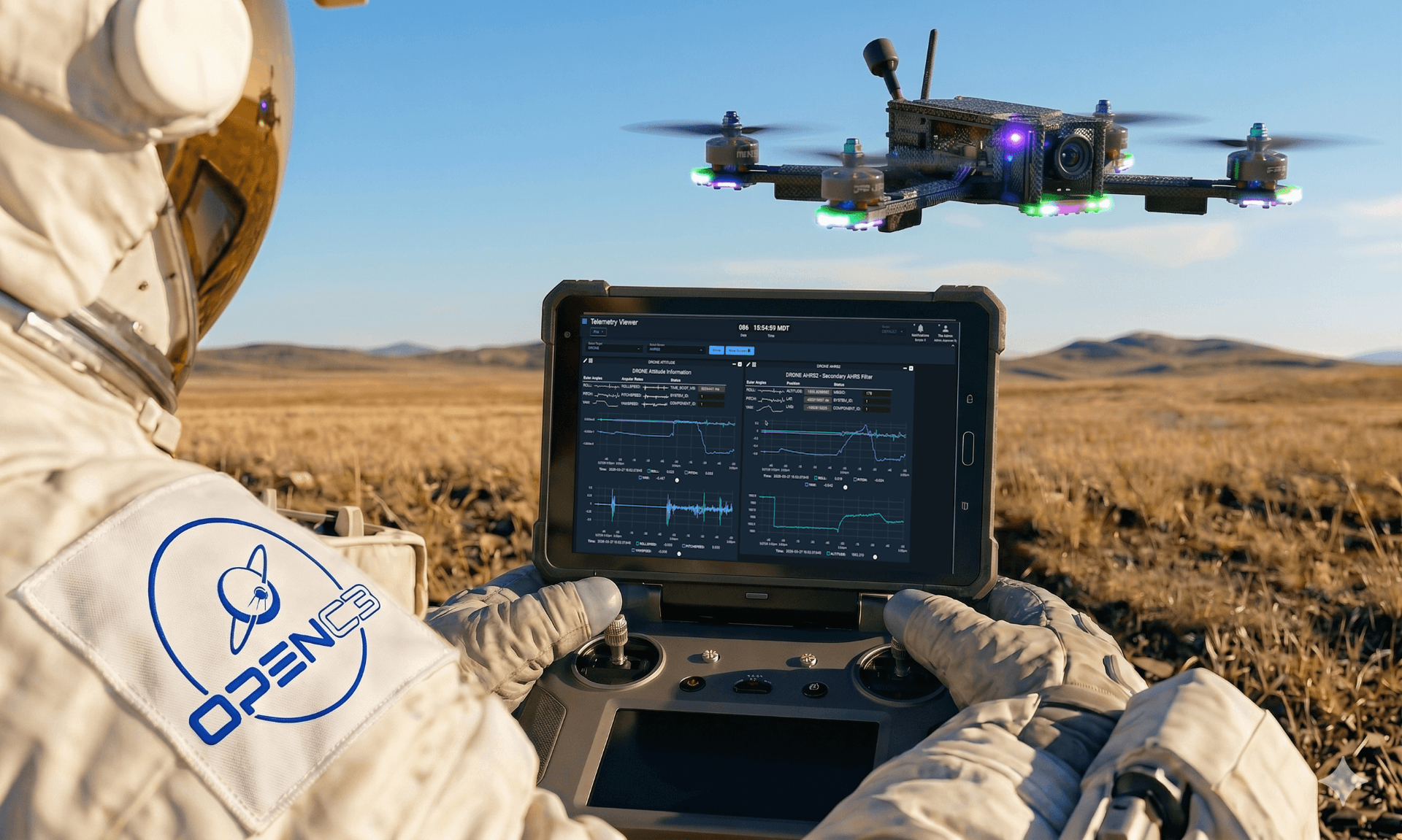
One console.
Factory floor to flight line.
The same COSMOS that drives a spacecraft factory drives the drone factory — MAVLink-native, payload-agnostic, classified-ready. Sim today, hardware tomorrow, fleet next quarter, all on one platform.
Drone control, assembled.
No bespoke GCS to maintain per airframe. Point COSMOS at your autopilot and payload chain, load the mission config, start flying.
MAVLink-native
Drive a quadcopter in simulation, then move the same scripts to the physical platform. ArduPilot, PX4, vendor forks.
Sensors, effectors, payloads
EO/IR, RF, SIGINT, comms, batteries, motors, gimbals — orchestrated under one UX.
Script-driven tests
Regression sweeps over flight modes, payload configs, comms scenarios. The same suite runs in sim and on the bench.
Factory + flight line
Manufacturing acceptance, range operations, and sustainment on one platform — not three.
Multi-vehicle control
Fleet operations, swarming workflows, GCS and ATAK integration. One operator, many tails.
Defense-ready
Air-gapped, classified, on-prem. SSO, RBAC, audit, FIPS-ready, deployed at programs of record.
From new airframe to fielded fleet.
Integrate
MAVLink and payload protocol drivers wired in days. New autopilot, gimbal, or radio? Plugin, not rewrite.
Bench & sim
Hardware-in-the-loop + SITL. Scripted regressions cover every flight mode and payload combination before metal flies.
Factory acceptance
Per-tail-number procedures with sign-off, calibration capture, and audit log. Every airframe ships with the same proof.
Flight line
Preflight checklists, mission upload, range ops — operators on the same console the engineers built the airframe with.
Fleet & debrief
Multi-vehicle ops, replay any sortie, trend across the fleet. Sustainment data flows back into the next build.
One platform. Four stages. From bench to fleet.
From the first MAVLink packet to the thousandth fielded sortie — the same COSMOS commands every stage. Configs move forward as the program moves forward.
Bring up new autopilots, sensors, and effectors under one console.
MAVLink, custom binary, RF control, vendor SDKs — COSMOS speaks the protocols and exposes them with the same UX. Integration engineers stop writing one-off GUIs.
- ArduPilot / PX4 MAVLink dialects and vendor forks supported out of the box
- Plugin SDK for proprietary autopilots, payloads, and ground radios
- Live telemetry decom and command authoring in hours, not weeks
- SITL and HITL drivers built in — sim first, hardware next
A new payload is a config change, not a new control plane.
Run scripted acceptance on every airframe before it leaves the line.
The same Script Runner used in I&T runs factory acceptance. Procedures branch on telemetry, capture calibration, and produce a signed report per serial number.
- Parameterized, version-controlled acceptance procedures
- Per-tail-number calibration capture and sign-off
- Audit-grade test records tied to serial, lot, and operator
- Limits-driven holds — no out-of-spec airframe ships
Every tail number ships with the same proof, in minutes.
Preflight, mission upload, range ops — on the same product.
Operators run the airframe their engineers built it with. Preflight checklists, mission upload, payload control, and live monitoring all flow through one console.
- Preflight procedures with go/no-go gates
- Mission and waypoint upload with validation
- EO/IR + RF payload control on the same operator surface
- Geofence and limits enforcement with operator-acknowledged release
Range ops without a separate GCS stack per airframe.
Multi-vehicle, multi-mission, multi-program — one install.
Scopes isolate programs, customers, and exercises on a shared COSMOS install. Replay any sortie. Trend across the fleet. Sustainment data flows back into the next build.
- Multi-vehicle operations with role-aware command authorization
- ATAK / external GCS integration via plugins
- Long-retention logging for trending and post-flight forensics
- Scopes per program, customer, or exercise on one platform
Adding the next program is configuration, not procurement.
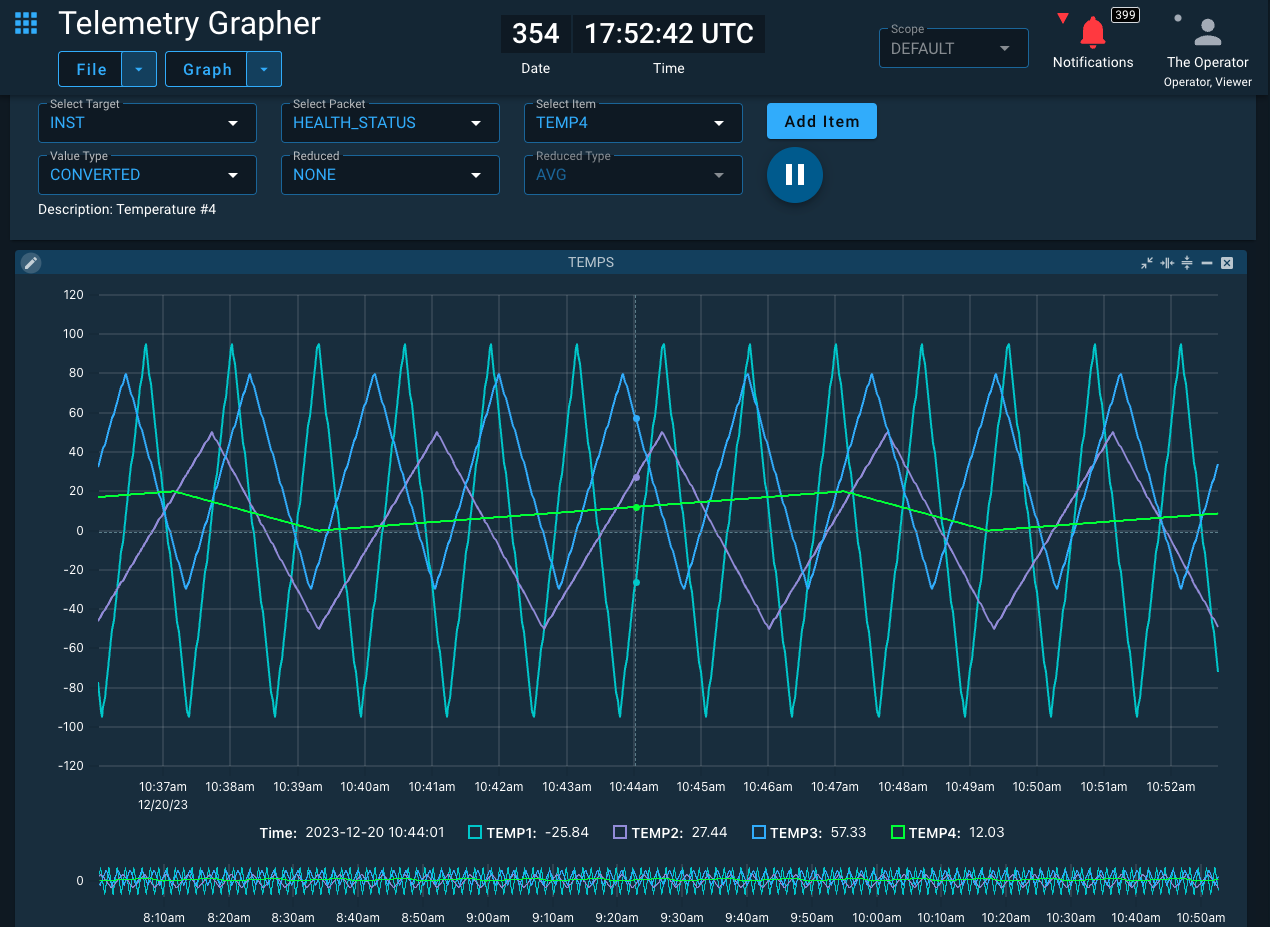
The view operators actually use during a sortie.
Drag-and-drop screens. Build the layout once; share it across every operator on the flight line. Scroll through the surfaces your team lives in from preflight to debrief.
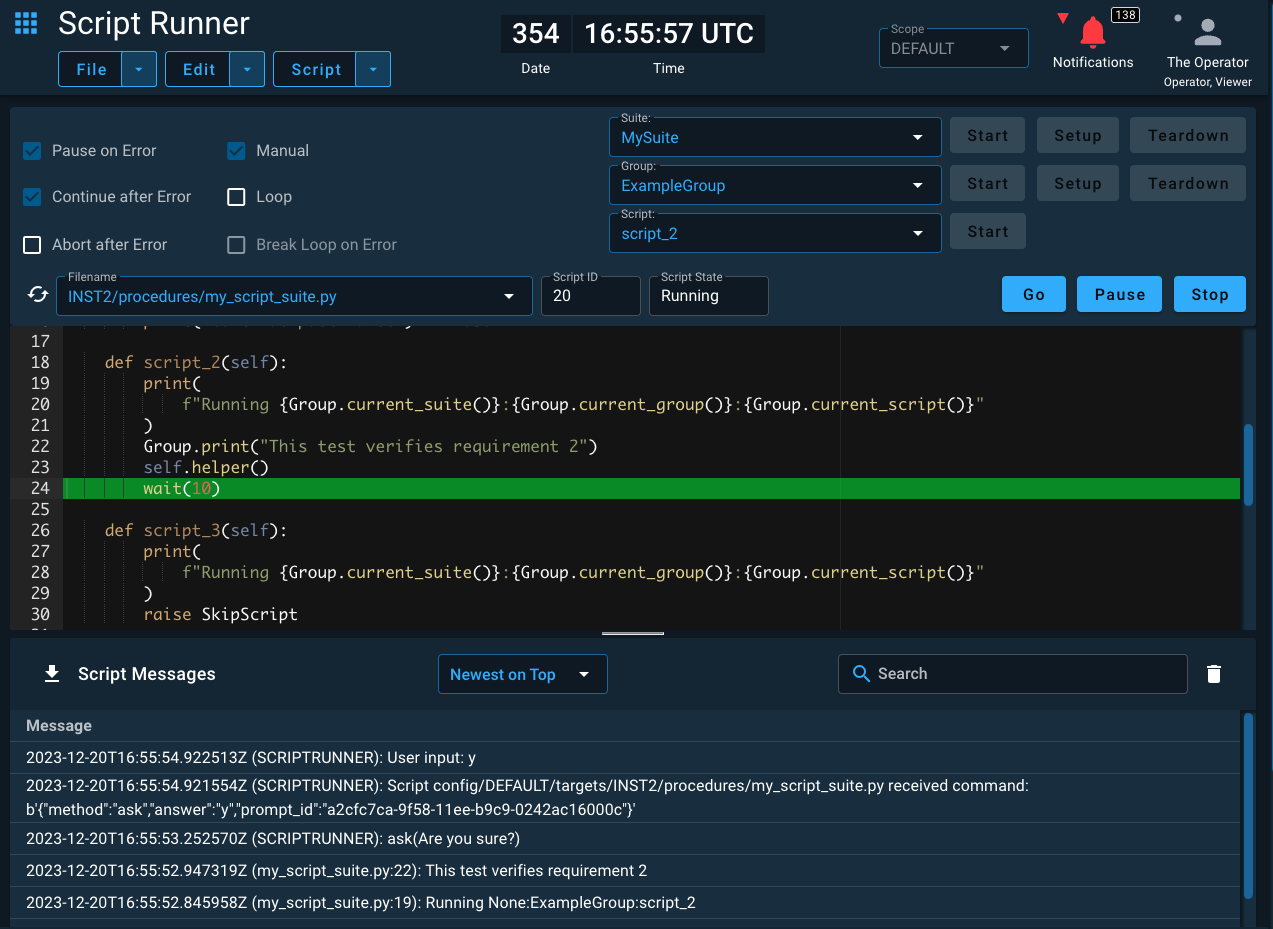
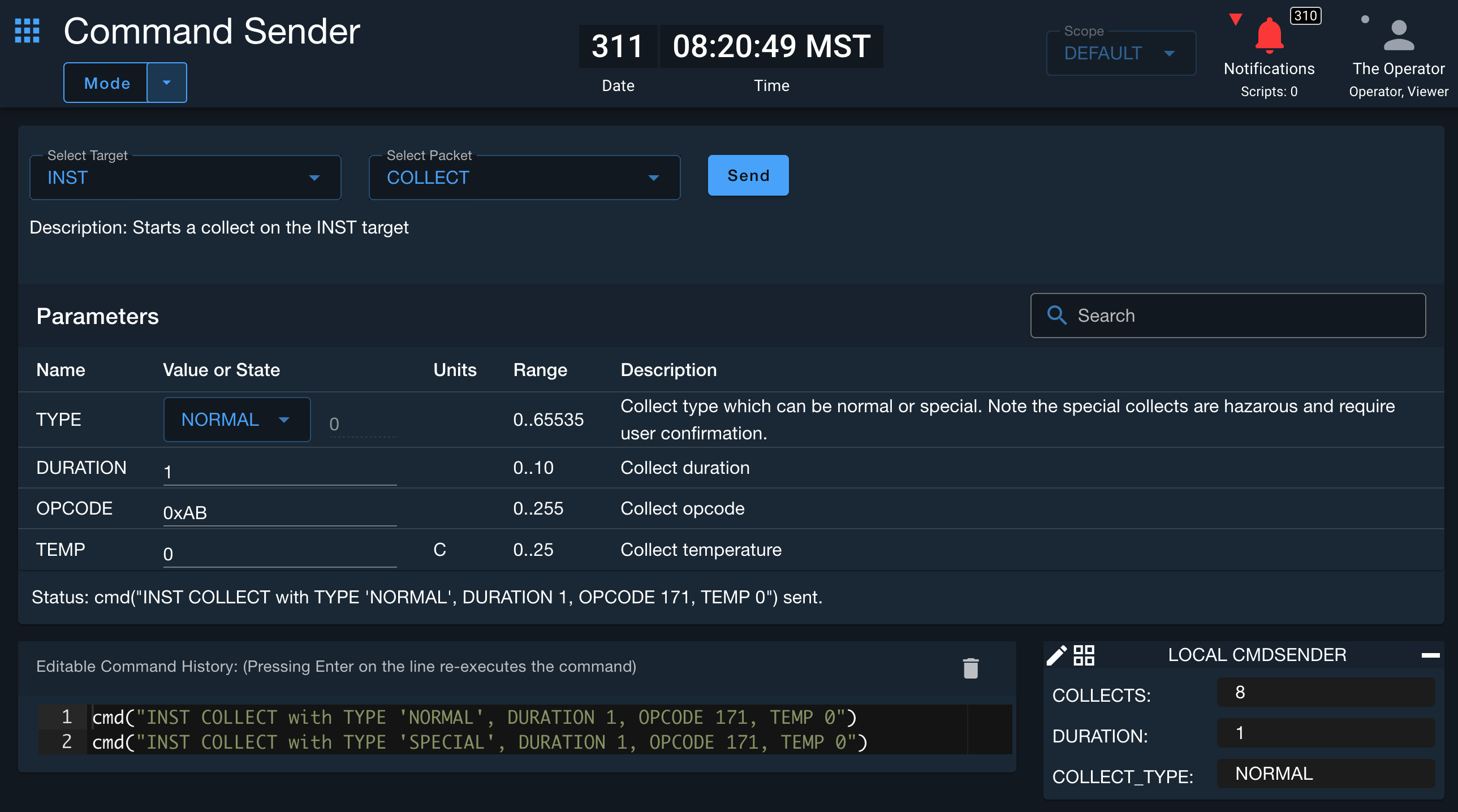
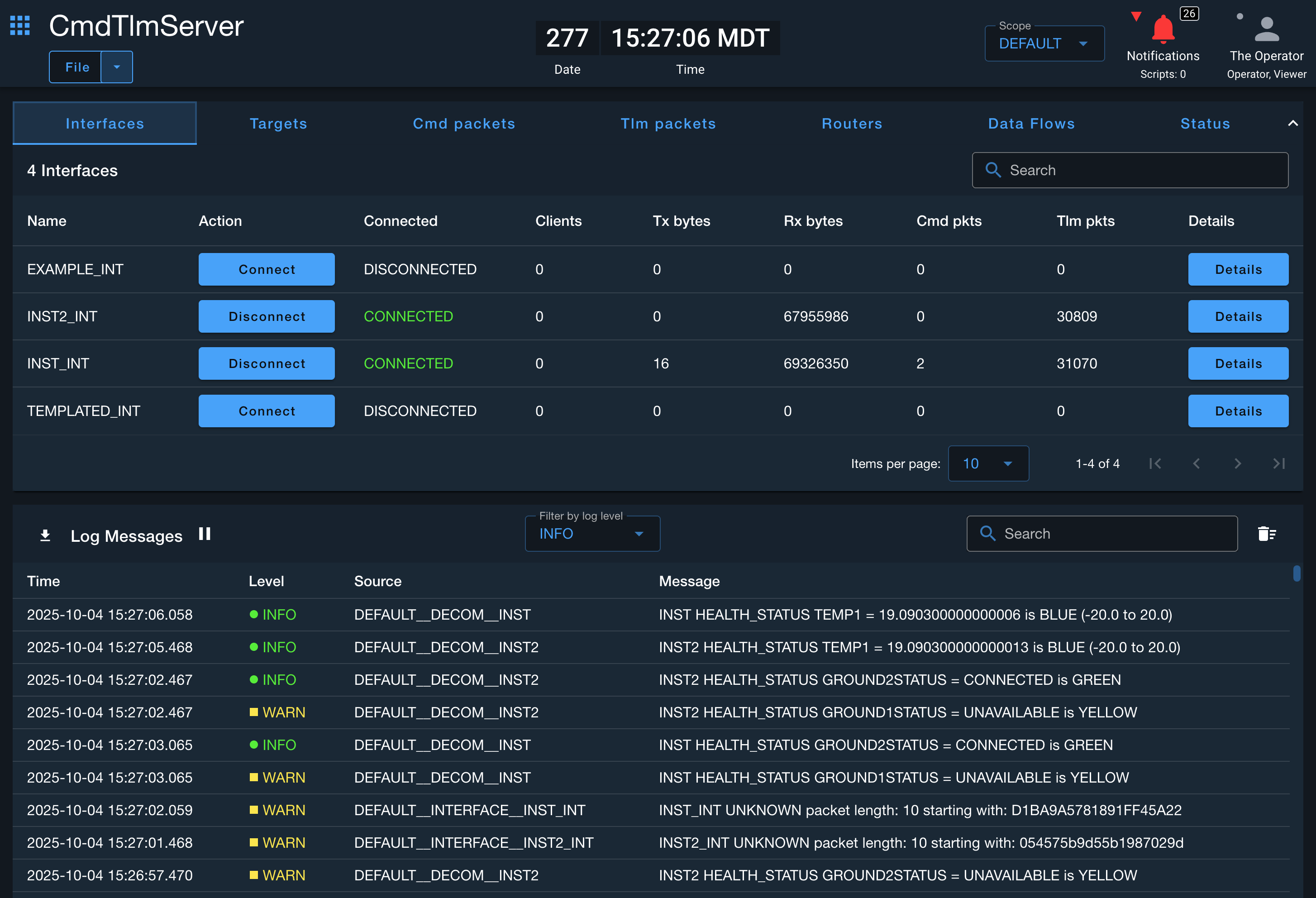
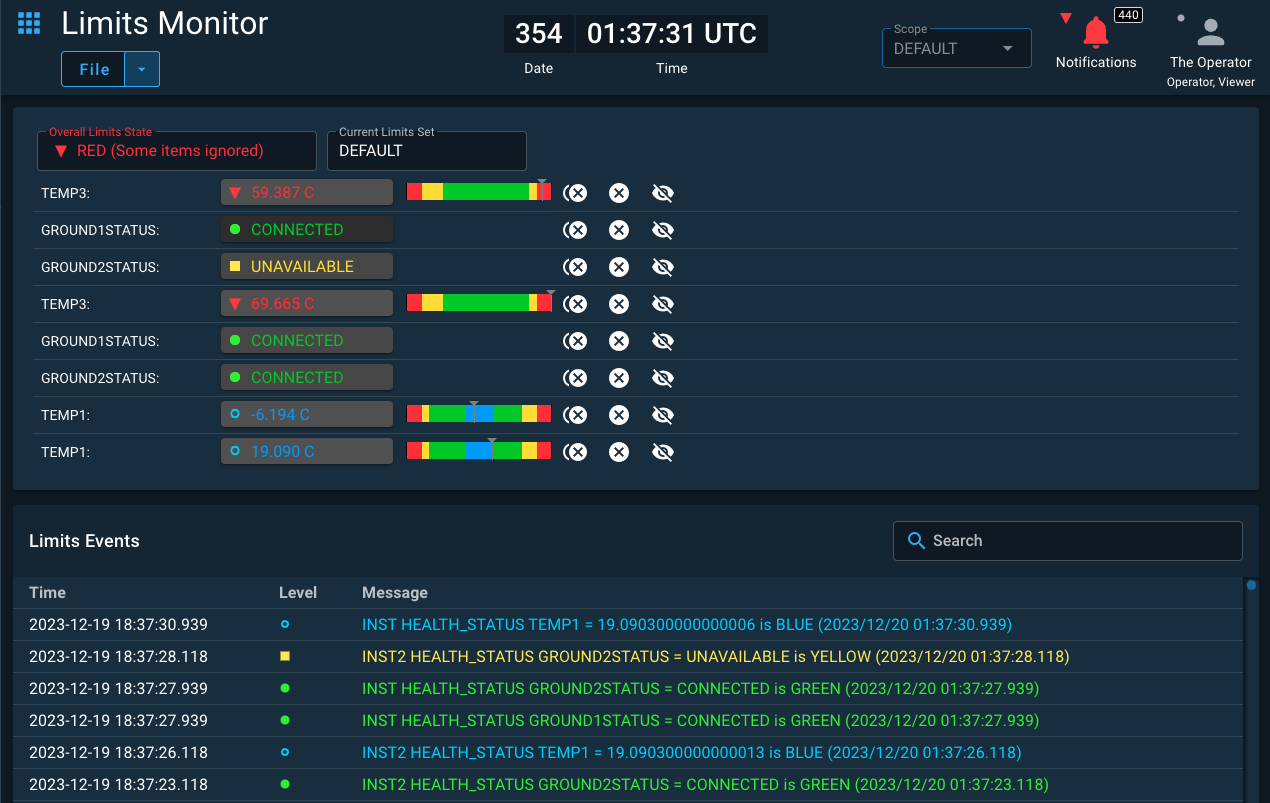
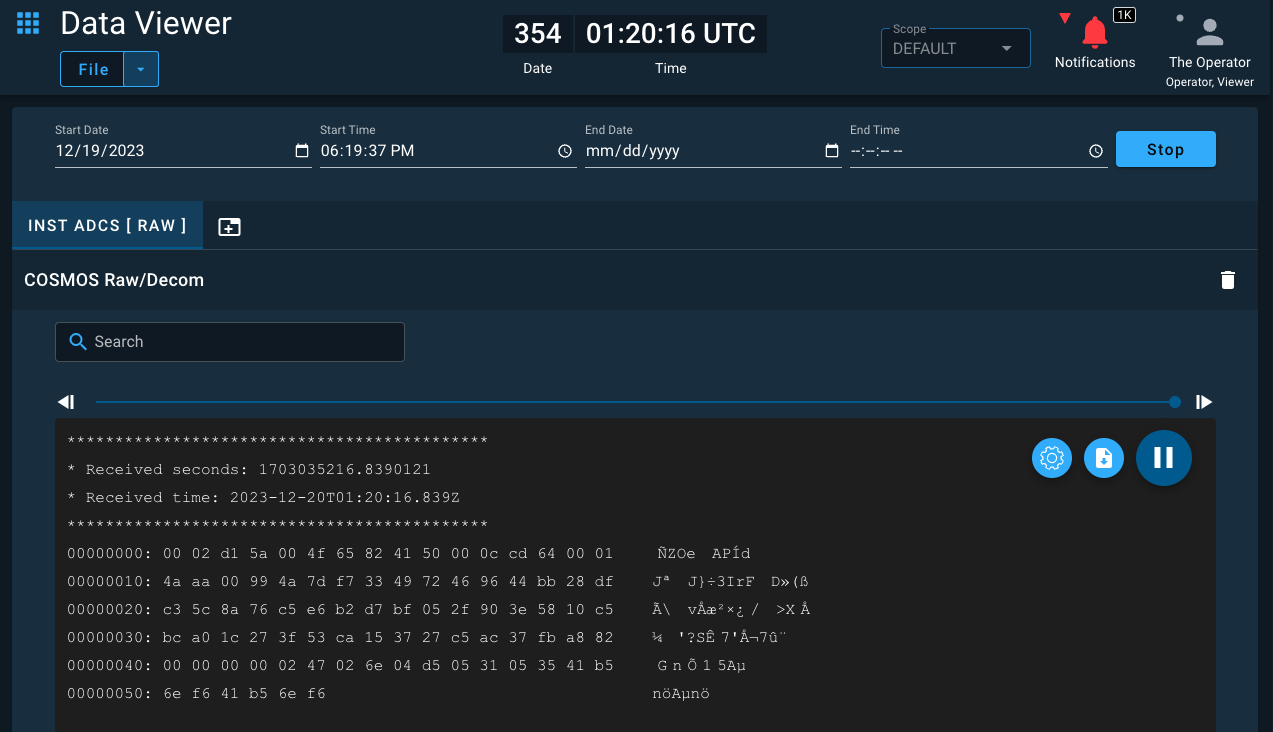
Sim today. Hardware tomorrow. Same scripts.
Ruby or Python. The same Script Runner that flies regression sweeps in SITL flies factory acceptance on the bench and preflight on the flight line. Procedures branch on telemetry, hold on limits, escalate when reality drifts.
- SITL → HITL → hardware on one procedure suite
- Per-tail-number acceptance with signed reports
- Limits-driven holds with operator-acknowledged release
- Headless automation for repeating sortie profiles
# Per-tail-number factory acceptance
set_tlm("UAV TAIL_NUMBER = '0217'")
wait_check("UAV ARMING_CHECKS == PASS", 30)

# Motor + ESC sweep
%w[M1 M2 M3 M4].each do |m|
  cmd("UAV MOTOR_TEST with ID #{m}, PCT 25")
  wait_check("UAV #{m}_RPM > 3500", 5)
end

# Payload bench check
cmd("PAYLOAD GIMBAL_HOME")
wait_check("PAYLOAD GIMBAL_OK == 1", 10)

puts("Tail 0217 cleared for flight test")One install.
Many programs.
COSMOS Enterprise scopes isolate programs, customers, and exercises on a single install. Vehicles, roles, procedures, and screens are scoped per program — the platform stays shared.
Standing up the next program is a config change, not a new GCS stack.
The control plane the drone Cambrian explosion needs.
Drone programs are spinning up faster than the bespoke GCS stacks that try to keep up with them. COSMOS is the platform a generation of spacecraft factories already proved — applied to the airframe, the payload, and the flight line.
“COSMOS excels at adapting to new hardware interfaces, and the drone market has standards like MAVLink that provide unified control across platforms. We built a MAVLink integration that immediately let us drive a quadcopter in simulation, then transition the same scripts to a physical drone.”
What you stop maintaining the day you adopt COSMOS.
Questions drone-program leads actually ask.
Which MAVLink dialects and autopilots do you support?+
Can COSMOS drive non-MAVLink autopilots and payloads?+
What about classified, air-gapped, or program-of-record deployments?+
Does it integrate with ATAK and our existing GCS?+
Does this run on-vehicle or only on the ground?+
Open source or enterprise for a drone program?+
Bring COSMOS to your drone program.
The fastest path from a new airframe, sensor, or payload to an integrated, controllable, fleetable system.