OpenC3 and VEGA: Accessible and Actionable Satellite Interference Data in COSMOS
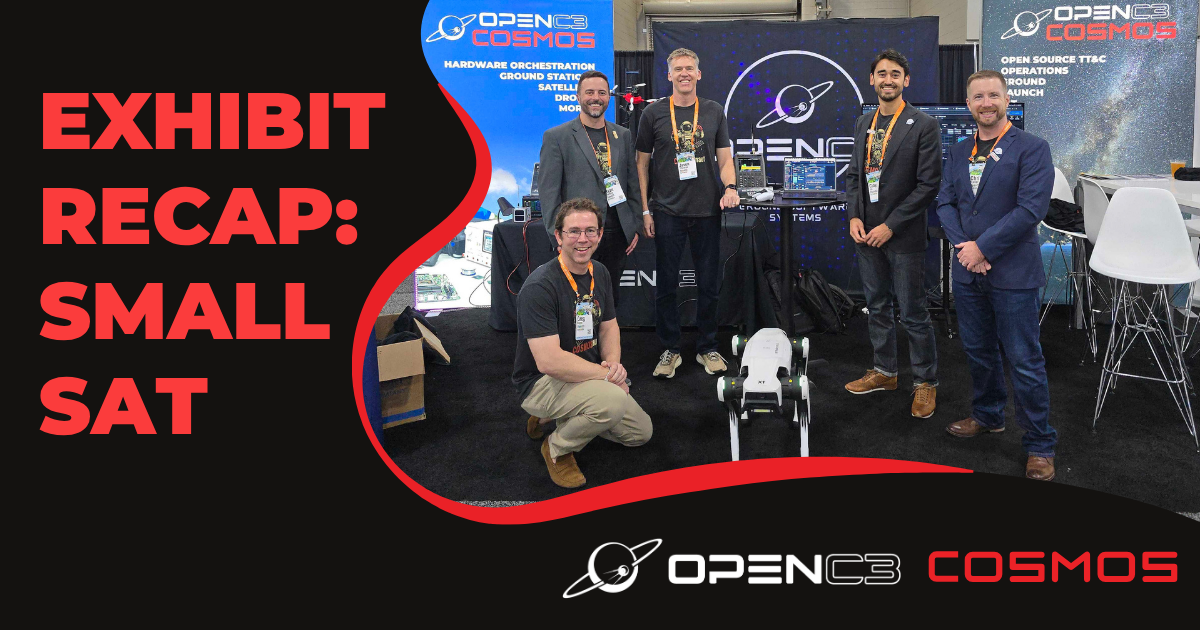
The OpenC3 team had many great conversations at SmallSat, and one of those conversations led to the creation of a new COSMOS plugin. The team over at VEGA is doing some cool work with forecasting satellite interference risk and wanted their data in the same platform where satellite operators already logging other telemetry. The VEGA plugin, Adjacent Satellite Interference Risk, is now live in the OpenC3 Store.
VEGA’s Co-Founder and CTO, Tom Patton, built the plugin in just a few hours (he does credit Claude for helping!) and sat down with OpenC3 Staff Software Engineer Clay Ito to talk about how easy it was to build and how it benefits satellite operators.
As the volume of on-orbit satellites increases, seemingly daily, the spectrum used to communicate with Earth remains finite, driving RF interference rates higher. The result is data throttling, leading to missed passes and dropped revenue. VEGA solves this problem by providing satellite spectrum intelligence that helps satellite operators optimize their downlinks.
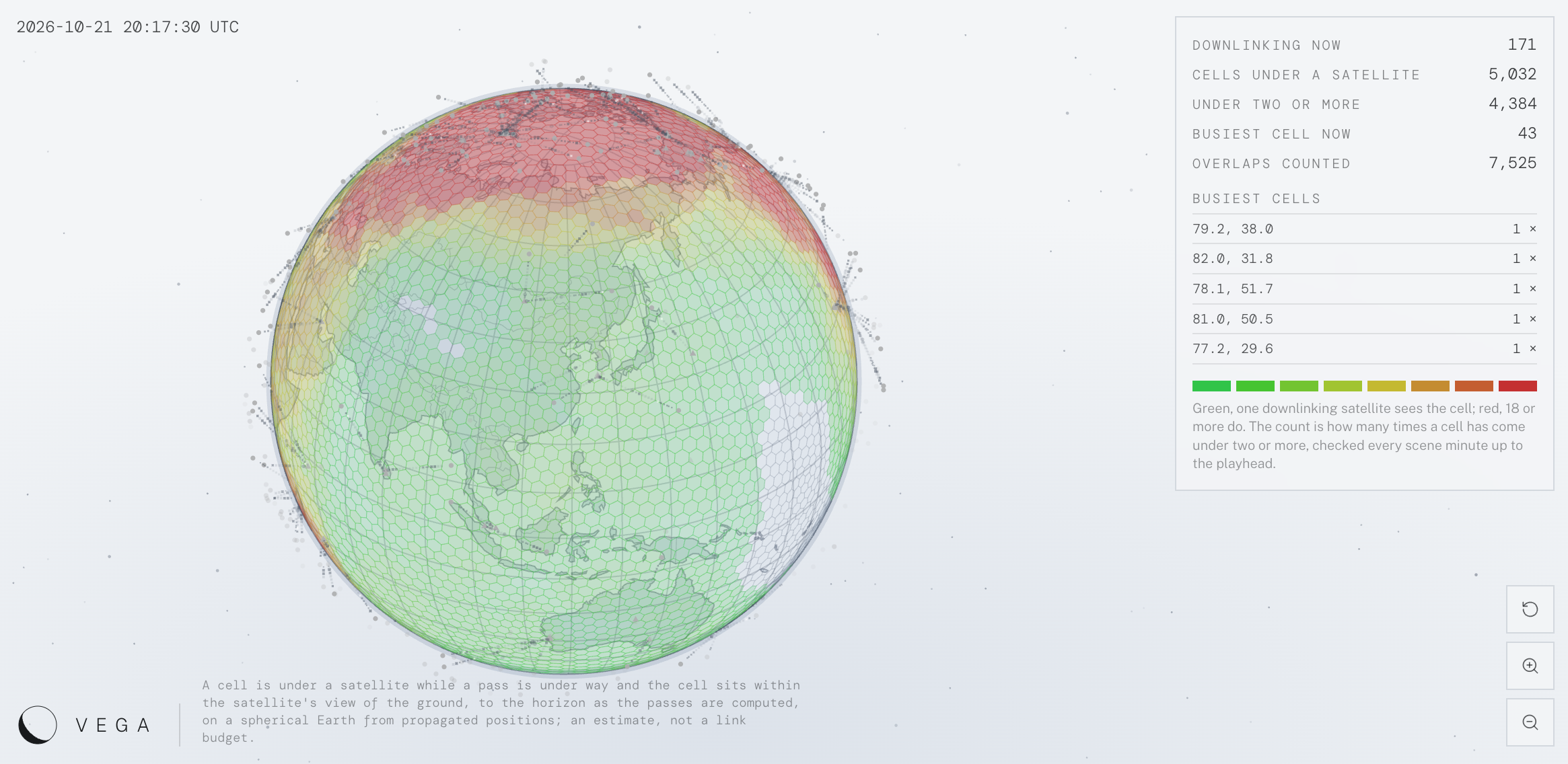
VEGA helps operators predict interference in advance so they can adjust their operations on the fly. This looks like switching the downlink to a different station to avoid interference, changing modulation encoding, and even debugging missed passes. If an operator misses a pass on a given day, they can home in on whether the miss was interference-related or due to a hardware issue.
VEGA’s data belongs with mission-critical telemetry already logged in COSMOS. Fortunately, Ito and Patton met at SmallSat in Salt Lake City to make that integration a reality. At the OpenC3 booth, we demonstrated the Hale Space Weather Plugin, and VEGA wanted to do the same. Instead of reinventing the wheel or creating another standalone tool, VEGA wanted be where operators are already spending their time—in COSMOS.
Patton said, “We wanted to put VEGA data where operators already were and allow them to use the tools that they’re familiar with and they like using. COSMOS is a huge part of that ecosystem. It really made a lot of sense as we were talking about how easy it was to build an integration. It felt like a no-brainer. For us, making it as easy as possible for operators was the thing that moved the needle the most.”
The industry has grown and will continue to grow over the next several years, which only means there’s more need for VEGA’s data. Everyone’s trying to get their bird in space and VEGA wants to help operators get their data back down to the ground. COSMOS can now import that data in the same place operators can act on it.
What does the VEGA Adjacent Satellite Interference Risk plugin for COSMOS do?
The VEGA plugin provides adjacent satellite interference risk data, and can forecast interference up to three days in advance. The data also shows four days in the past for debugging passes.
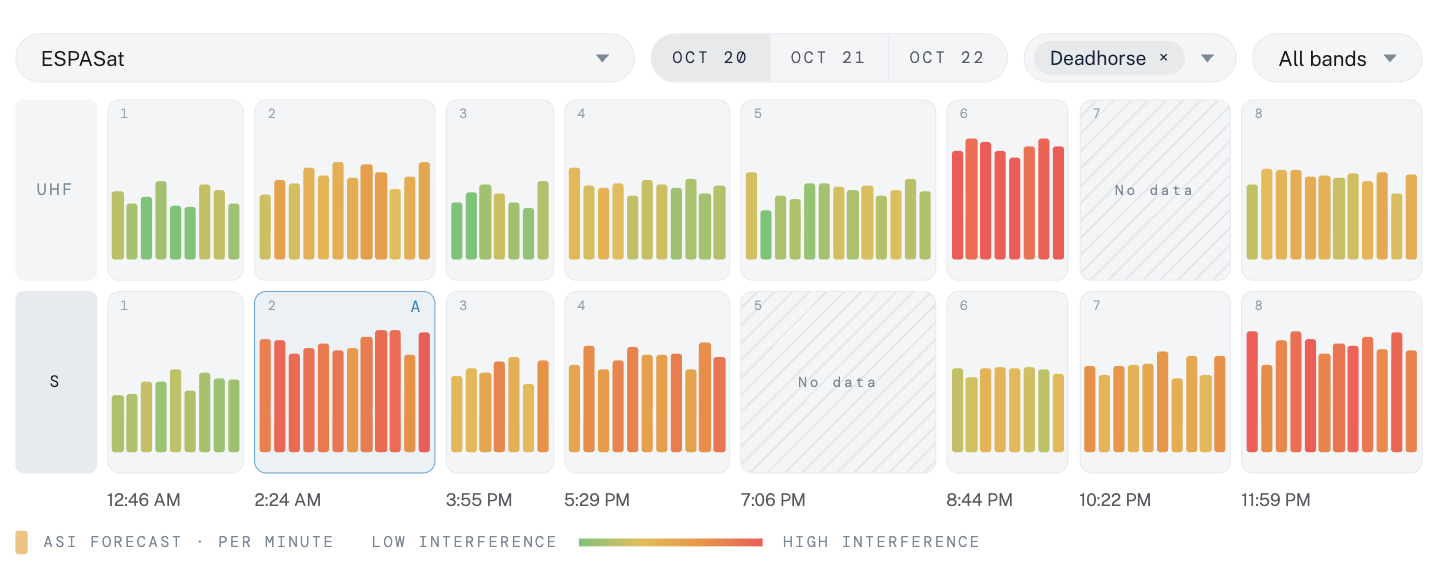
The plugin allows operators to view individual ground stations or satellites (upper left dropdown) then view band-specific interference across the spectrum, coupled with the Adjacent Satellite Interference (ASI) risk. Essentially, this number is the likelihood that there’s going to be interference on upcoming passes.
The color-coding makes it easy to understand the data with red depicting high interference. An operator would look at this data and say “at 9 p.m. on the 13th, we’re likely to experience interference over Boulder, CO. That means we want to change our downlink from Boulder over to a separate ground station that has less interference.”
Additional use cases include setting the stage for clean passes and plan ahead to send more data via modulation encoding or MODCOD. Patton said, “This really just puts the control back into the hands of the operators so that they can maximize the data they send down, depending on the interference level.”
The Developer Experience: Building the VEGA plugin for COSMOS
“Clay and his team just made it incredibly simple for us to get set up. I think there’s a few really nice things about COSMOS. The big one being that it’s open source,” said Patton.
The first step was figuring out what the code looks like and looking at sample apps to build the structure of the plugin. Patton used AI to help analyze the system, the apps, and understand the scaffolding of what the plugin should look like and the functionality it needs to have.
“Overall it was pretty straightforward and I can’t say enough good things. It was a super simple process for us and I’m really glad that we did it,” Patton added.
But this isn’t a one and done plugin. The VEGA team has plans to enhance their COSMOS plugin by layering on machine learning to give users specific MODCODS that allow them to optimize their passes and get more data down. The true power of VEGA will be in Adaptive Modulation Encoding (AMC).
Patton explained that AMC “allows you to change your MODCOD on the fly, as opposed to having the same MODCOD for every single pass. With a fixed MODCOD operators are going to be below interference levels and this works pretty well. But the problem is that you’re leaving data on the table. AMC predicts interference levels in advance and layers on specific MODCODs to get more data down to the ground.” Patton referenced a study where operators saw a 30% increase in data being sent to the ground by using AMC.
VEGA plans to make this technology easy to implement and access in COSMOS. With this planned upgrade to the plugin, operators can add data, their API key, and they’ll get back the MODCODS they need to set at any given time.
When asked what advice Patton would give to other teams looking to create a plugin, he recommended an iterative approach. Start small and then layer on other features. He also shared a PSA for other developers to utilize environment variables and secrets in COSMOS to store demo API keys or app-specific data.
While the entire process took a few days, most of that time was thinking through use cases and front-end design and functionality. Once he knew how he wanted it to look and work, the build process was straightforward and only took a few hours of coding thanks to quality documentation around building a tool.
Download the VEGA plugin for COSMOS
Download the VEGA plugin for free at the OpenC3 Store. The plugin does include a demo API key.
The VEGA plugin is a welcome addition to our store and we always welcome submissions from other developers and organizations. Learn how to build a custom plugin or tool with this tutorial video from Clay Ito!
Stay connected with OpenC3 and make sure you always get the latest news and insights by subscribing to our newsletter!